
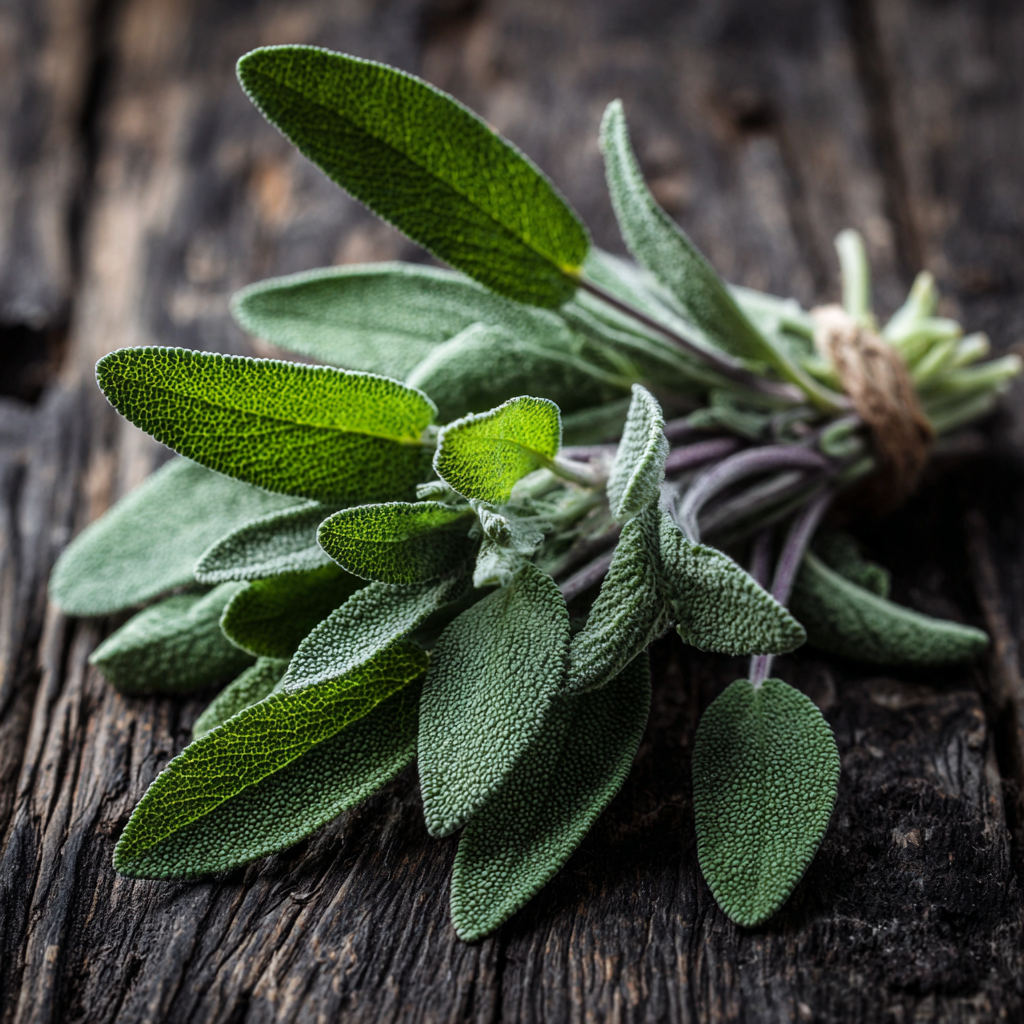
Salvia officinalis. Common names: sage, garden sage, common sage
Sage has been used for centuries as a kitchen herb and a trusted plant ally for everyday wellness. People often reach for it to support digestion, soothe the throat, or rekindle a sense of balance when they feel run down. It’s an herb with a warm, steady character and a long tradition of helping the body find its footing. Even a small amount can feel grounding and comforting.
Active constituents: Sage contains volatile oils, flavonoids, tannins, rosmarinic acid, diterpenes, triterpenes, vitamins A and K, and several antioxidant compounds. These components contribute to its antimicrobial, antioxidant, and anti-inflammatory qualities.
Preparations: The volatile oils and water-soluble compounds extract well in teas and infusions, while alcohol-based tinctures capture its resinous and aromatic constituents. Sage can also be used in glycerites, honey infusions, and as a culinary herb. The essential oil is highly concentrated and not for internal use.
Use: People commonly take sage as a tea for sore throats or heavy digestion, as a tincture for more targeted support, or as a simple culinary spice to warm the stomach. It’s also used as a gargle or mouth rinse to calm inflammation in the throat and gums.
Actions in our body: Sage acts as an astringent, antimicrobial, digestive stimulant, antioxidant, and mild nervine. It helps tighten and tone tissues, ease excess mucus, support digestion, and calm minor tension held in the body.
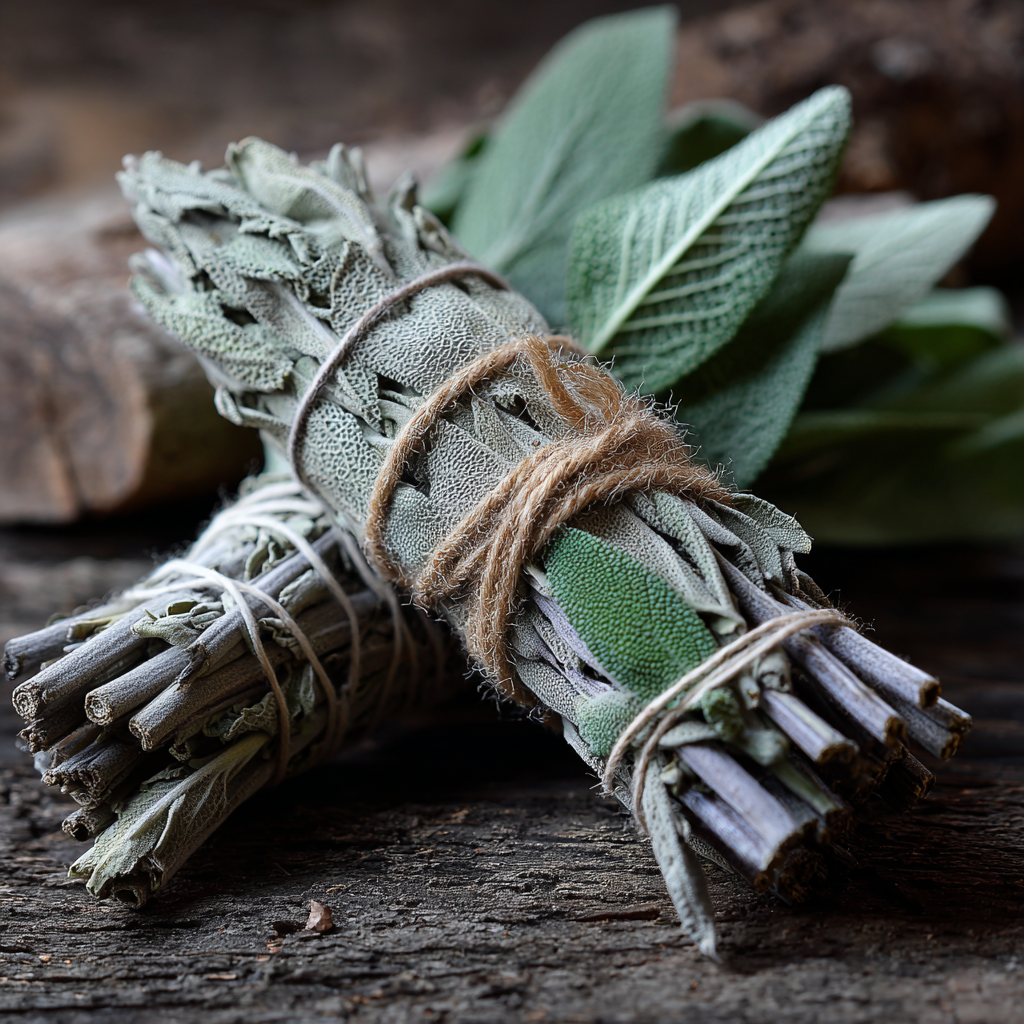
Dosage & safety: Infusion – 3-12 g dried leaf/day divided into 1-4 doses (Mills & Bone, 2005); Tincture: 2-4 mL (1:5, 40%) 3x/day (Hoffman, 2003)
Pharmacology: Rosmarinic acid and flavonoids help reduce oxidative stress and calm inflammation. The volatile oils contribute antimicrobial activity and help stimulate digestive secretions. Tannins provide the astringent action that tightens tissues and reduces excess fluid. Together, these compounds support both surface and internal wellness.
Taste: Warm, aromatic, slightly bitter, and a bit drying on the tongue.
Energy: Warming, drying, and gently stimulating.
Botanical description: Sage is a small, shrubby perennial with soft gray-green leaves covered in fine hairs, giving them a velvety feel. It produces purple-blue flowers in upright spikes and has a strong, resinous aroma.
Family: Lamiaceae (mint family).
Native region: The Mediterranean.
Geographic distribution: Now grown widely in Europe, North America, and many temperate regions around the world.
Harvesting guideline: Harvest leaves in the late spring or early summer before the plant flowers for the strongest aroma and potency. Choose healthy branches and take only a small portion so the plant remains vigorous. Allow the plant to dry between harvests and avoid taking leaves during wet weather.