
Ginkgo is traditionally used to support circulation and cognitive health. Research suggests it may help maintain memory, focus, and overall brain function through its antioxidant properties.
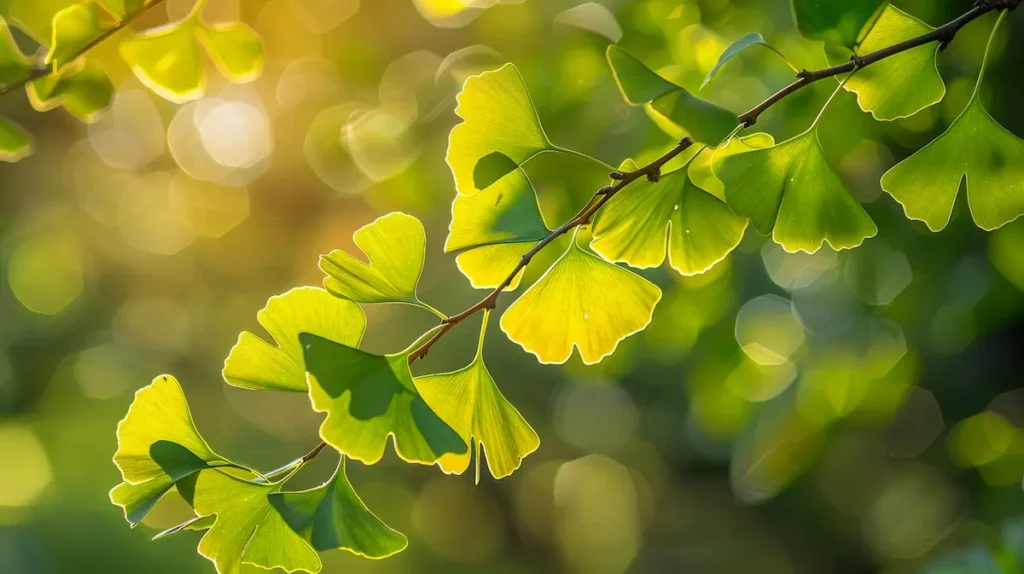
Ginkgo biloba L. European Medicines Agency (EMA)
Common names: ginkgo, maidenhair tree
Ginkgo leaves have a long history of use in East Asian traditions and later became widely adopted in European phytotherapy. Modern European monographs describe both well-established and traditional oral uses of ginkgo leaf preparations—often framed around age-associated cognitive concerns and minor circulatory discomforts (like cold hands/feet or heavy legs). European Medicines Agency (EMA)+2European Medicines Agency (EMA)+2
Practical Uses
Ginkgo is the botanical equivalent of that wise elder who’s seen everything and still shows up looking sharp. This tree has been around for an astonishingly long time (it’s often called a “living fossil”), and humans have been using it for centuries—especially the leaf—for traditions focused on memory, circulation, and the general “I’d like my brain to feel a bit less foggy” vibe.
In modern herbal practice, ginkgo is mostly used as a standardized leaf extract rather than a casual backyard tea. That’s partly because the leaf’s chemistry is potent, and partly because quality control matters here more than with many gentler herbs. Ginkgo rewards precision. It’s not offended by measuring spoons.
For Humans
In real-world practice, ginkgo is most often used to support:
- Mental clarity and focus, especially as people age (traditionally and in modern supplement use) European Medicines Agency (EMA)+1
- Healthy circulation, particularly the “cold fingers, cold toes” type of scenario that tends to show up in winter or desk-job life European Medicines Agency (EMA)+1
- Overall antioxidant support, because ginkgo leaf is rich in flavonoids and related compounds ScienceDirect+1
A practical note: most of the research and monographs center on standardized extracts, not random “ginkgo leaf powder in a capsule.” That difference matters. European Medicines Agency (EMA)+1
For Pets
Ginkgo is not a go-to herb for pets.
- Why the caution: ginkgo can interact with medications and may increase bleeding risk—concerns that are harder to manage safely in animals without veterinary oversight. NCCIH+1
- Extra caution around seeds: ginkgo seeds have well-known toxicity concerns in humans and are generally not something to experiment with around pets. (If a pet chews on seeds, a veterinarian should be contacted promptly.)
If someone wants botanical cognitive support for a pet, that’s a “talk to your vet first” category, not a DIY project.
Herbal Actions
Traditionally and in modern herbal references, ginkgo leaf preparations are associated with:
- Circulatory support: often described as supporting peripheral circulation and healthy blood flow dynamics European Medicines Agency (EMA)+1
- Antioxidant activity: flavonoids and related compounds help buffer oxidative stress in tissues ScienceDirect+1
- Neuroprotective direction (research interest): studies suggest standardized extracts may influence pathways involved in neuronal stress responses PMC+1
- Anti-inflammatory signaling modulation (mechanistic research): observed in experimental models, often tied to terpene lactones and flavonoid fractions PMC+1
Parts Used
Primary part used: leaf (often listed as Ginkgo folium) European Medicines Agency (EMA)+1
Harvest timing: leaves are typically collected in the growing season (often late summer into fall) and carefully dried. Commercial production frequently emphasizes controlled harvesting and extraction to manage constituent levels.
Usage Forms & Shelf Life
Internal use (most common):
- Standardized extract capsules/tablets (common in research and monographs) European Medicines Agency (EMA)+1
- Tincture (less standardized unless professionally formulated)
- Tea/infusion is less common in modern practice because dosing is harder to standardize and quality/safety considerations are tighter.
External use:
Not a typical “topical herb.” Most traditional and modern references focus on oral use. European Medicines Agency (EMA)
Shelf-life ranges (practical guidelines):
- Standardized capsules/tablets: follow label expiration; typically stable for 1–3 years if stored cool/dry
- Dried leaf: often ~1 year for best quality (aroma and color decline with time)
- Tincture: commonly 3–5 years when stored well (depends on alcohol % and storage)
Active Constituents
Ginkgo is famous for a few “headline” compounds:
- Flavonol (flavone) glycosides: commonly associated with antioxidant activity; standardized extracts are often set to about 24% flavonoid glycosides PubMed+2ScienceDirect+2
- Terpene lactones: the unique ginkgo group—ginkgolides (A, B, C, etc.) and bilobalide—often standardized to about 6% in well-known extracts PubMed+1
- Ginkgolic acids: naturally present in the plant but considered undesirable at higher levels; quality manufacturing aims to keep these very low AAFP+1
If you’ve ever wondered why ginkgo products talk so much about standardization, it’s because this chemistry actually earns the fuss.
How It Works
Ginkgo’s best-studied effects come from standardized leaf extracts, which appear to work through multiple overlapping mechanisms:
- Antioxidant support: flavonoid fractions can help reduce oxidative stress, a common theme in brain and vascular aging ScienceDirect+1
- Microcirculation and blood flow dynamics: ginkgo has been studied for effects on vascular tone and blood flow properties, which is why it shows up in traditional “circulation support” contexts PubMed+1
- Platelet-activating factor (PAF) modulation: certain ginkgolides—especially ginkgolide B—are often discussed in relation to PAF pathways, a plausible link to both circulation effects and bleeding-risk cautions PMC+1
That last point is also why ginkgo doesn’t play nicely with every medication. More on that below.
Extraction & Preparation
Ginkgo is one of those herbs where how it’s extracted changes the outcome dramatically.
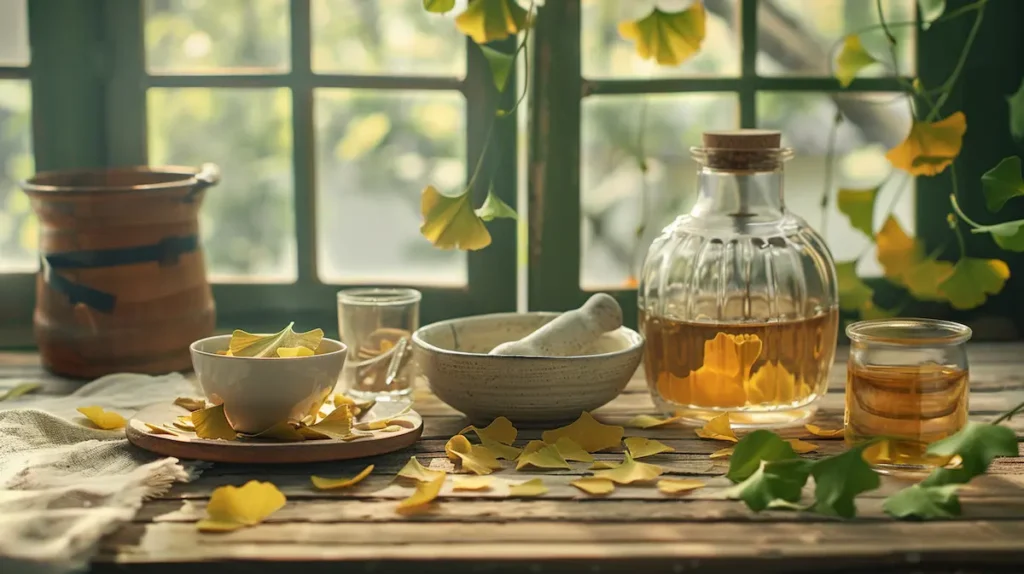
- Standardized extracts: commonly formulated to specific constituent ranges (often cited as 24% flavonoid glycosides and 6% terpene lactones) to improve consistency across batches PubMed+2ScienceDirect+2
- Solvent choice: hydroalcoholic extraction is commonly used to capture both flavonoids and terpene lactones in a stable form (and to allow standardization). PubMed+1
- Why not just “leaf tea”?: you can make it, but you won’t reliably hit the same constituent profile, and safety/interaction considerations are harder to manage without consistent dosing.
Processing Cautions
A few very practical cautions with ginkgo:
- Avoid DIY seed use. Seeds have toxicity concerns and are not a casual home-herbal project.
- Choose products that address ginkgolic acids. Higher ginkgolic acid content is considered a quality red flag. AAFP+1
- Respect interactions. If someone is on blood thinners or has surgery coming up, ginkgo needs a professional conversation, not just optimism. NCCIH+2Mayo Clinic+2
Herb Identification
Visual traits:
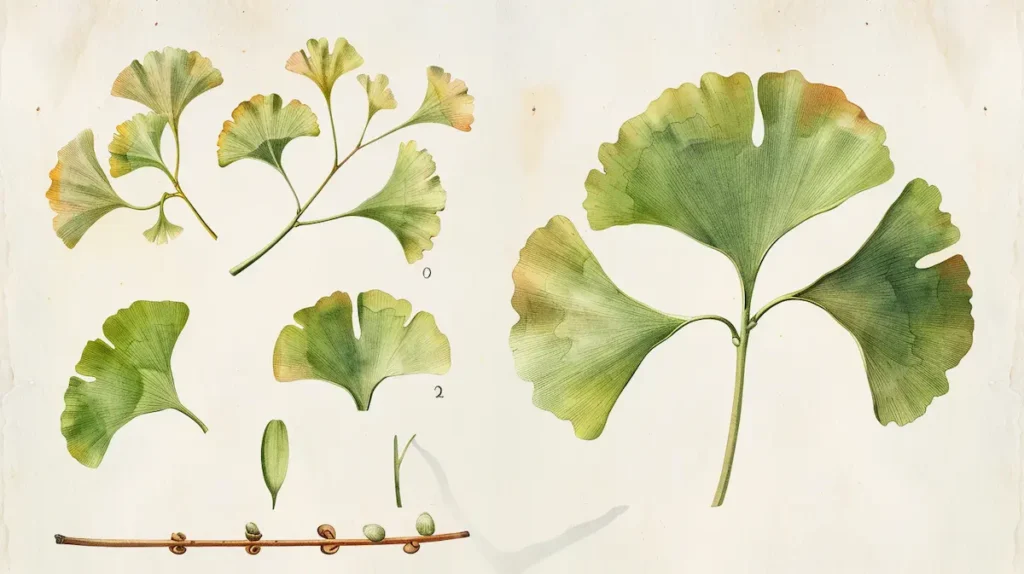
- Distinctive fan-shaped leaves with veins that fork repeatedly (a little like a delicate hand-held fan)
- Leaves often have a notch at the outer edge (not always, but common)
- Bright yellow fall color that can be almost theatrical
Growth habit:
- Large, long-lived deciduous tree
- Often planted as a street or ornamental tree in temperate cities
Look-alikes and safety notes:
- Ginkgo is fairly unique; look-alikes are uncommon once you’ve seen the leaf shape.
- The main safety concern is not misidentifying the tree—it’s using the wrong part (seeds) or using low-quality products.
Selecting Quality Herb
For most people, “quality” here means choosing the right type of product.
Look for:
- A standardized leaf extract with clear labeling (constituent standardization is a good sign) PubMed+1
- Reputable third-party testing or quality certifications when possible
- Clear allergen and ingredient transparency (no mystery blends)
Red flags:
- No standardization info at all for a product making big claims
- “Whole leaf powder” sold as equivalent to standardized extracts (it isn’t, in research terms) PubMed+1
- Sketchy sourcing, vague labeling, or no batch/quality information
Dosage Guidelines
These are general traditional/monograph-style ranges and vary by product. Always follow the specific product label and consider professional guidance—especially with medications.
For Humans
Common ranges found in European-style monographs and references for standardized extracts include:
- Standardized extract: often 120–240 mg per day, sometimes divided into 2–3 doses Herbalgram+1
Because products differ, dosing by “number of capsules” without knowing the extract type isn’t very meaningful.
For Pets
Very conservative guidance:
- General recommendation: avoid routine use unless a veterinarian specifically advises it.
- If exposure occurs (especially seeds): contact a veterinarian promptly.
Side Effects & Contraindications
Ginkgo is widely used, but it’s not “risk-free.”
- Bleeding risk and anticoagulants/antiplatelets: ginkgo may increase bleeding risk, especially when combined with blood thinners (e.g., warfarin) NCCIH+2NCCIH+2
- Surgery: many clinical sources advise stopping ginkgo ahead of surgery due to bleeding concerns Mayo Clinic+1
- Seizure risk concerns: some sources caution about seizure risk in susceptible individuals Mayo Clinic
- Pregnancy: European monographs list pregnancy as a contraindication in certain use categories; other medical references also advise caution European Medicines Agency (EMA)+1
- Common side effects: may include headache, GI upset, dizziness, or allergic reactions NCCIH+2NCCIH+2
Natural Growing Areas
Ginkgo is native to China and has been cultivated widely across temperate regions worldwide. Today it’s grown and planted throughout Europe and North America as an ornamental and shade tree, partly because it tolerates urban conditions better than many trees with more delicate sensibilities. European Medicines Agency (EMA)+1
Growing Tips
Growing ginkgo is more like a relationship than a hobby—it’s a long-term commitment.
- Light: full sun to partial shade
- Soil: adaptable, prefers well-drained soil
- Water: regular watering when young; once established, it’s fairly drought-tolerant
- Patience: ginkgo is slow-growing at first, then finds its stride
- Important garden reality: female trees produce fruits with a famously unpleasant odor when they drop. Many landscapers choose male cultivars for this reason.
Traditional Recipes
Ginkgo isn’t a classic kitchen herb, and it’s not the first plant most herbalists reach for in teas. Still, traditional and practical preparations include:
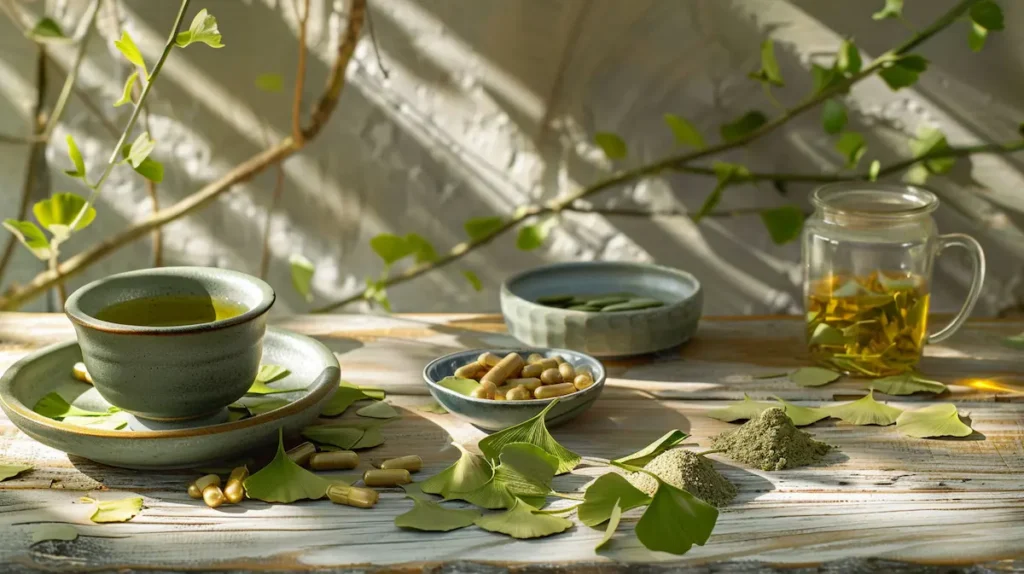
- Standardized extract capsules/tablets (the modern mainstay; most studied) PubMed+1
- Tincture made from leaf (used by some practitioners, with careful dosing)
- Leaf infusion (less common; chosen more for tradition than precise standardization)
Frequently Asked Questions
Is ginkgo safe for daily use?
Many adults use standardized ginkgo leaf extracts daily, but it depends on the person and their medications. If you take blood thinners, have a bleeding disorder, or have surgery planned, ginkgo needs professional guidance. NCCIH+1
How long does it take to notice ginkgo effects?
Herbal traditions and many supplement protocols think in weeks, not days. People often trial it for several weeks to judge whether it feels helpful. If nothing changes, that’s useful data too—your body is allowed to be unimpressed.
Can pets use ginkgo?
It’s generally not a casual “pet herb,” mostly because interaction and safety concerns are harder to manage in animals. If a veterinarian recommends it, they’ll guide dosing and monitoring. Otherwise, it’s best left on the human shelf.
What does ginkgo taste like?
The leaf is mildly bitter and a little astringent—more “serious tea” than “cozy bedtime blend.” Most people skip the taste entirely by using capsules or tablets.
Fresh vs dried—what’s better?
Most commercial products use dried leaf to support consistency and stability in extraction. Fresh leaf isn’t commonly used for standardized preparations at home. With ginkgo, consistency is the whole game. PubMed+1
How long does ginkgo last when stored?
Standardized tablets and capsules usually keep until their labeled expiration date when stored cool and dry. Dried leaf is best used within about a year for quality, while tinctures often last several years. Storage conditions matter more than most people think—heat and humidity are herb thieves.
REFERENCES
European Medicines Agency (EMA). European Union herbal monograph: Ginkgo biloba L., folium European Medicines Agency (EMA)
EMA. Assessment report: Ginkgo biloba L., folium European Medicines Agency (EMA)
NCCIH (NIH). Ginkgo: usefulness and safety; herb–drug interaction guidance NCCIH+1
American Botanical Council (HerbalGram). German Commission E monographs: ginkgo leaf / extract Herbalgram+2Herbalgram+2
Clostre F. Review on standardized ginkgo extract EGb 761 and constituent standardization PubMed
Bent S, et al. Review discussing bleeding reports and trial limitations PMC
AAFP. Clinical review noting ginkgolic acids in unprocessed leaf and general safety notes AAFP
The information on this site is intended for educational use only. It is not meant to diagnose, treat, cure, or prevent any condition, and should not be used as a substitute for professional medical guidance.