
Chamomile recipes offer gentle ways to support relaxation and daily well-being. Explore simple teas, infusions, and herbal blends you can make at home.
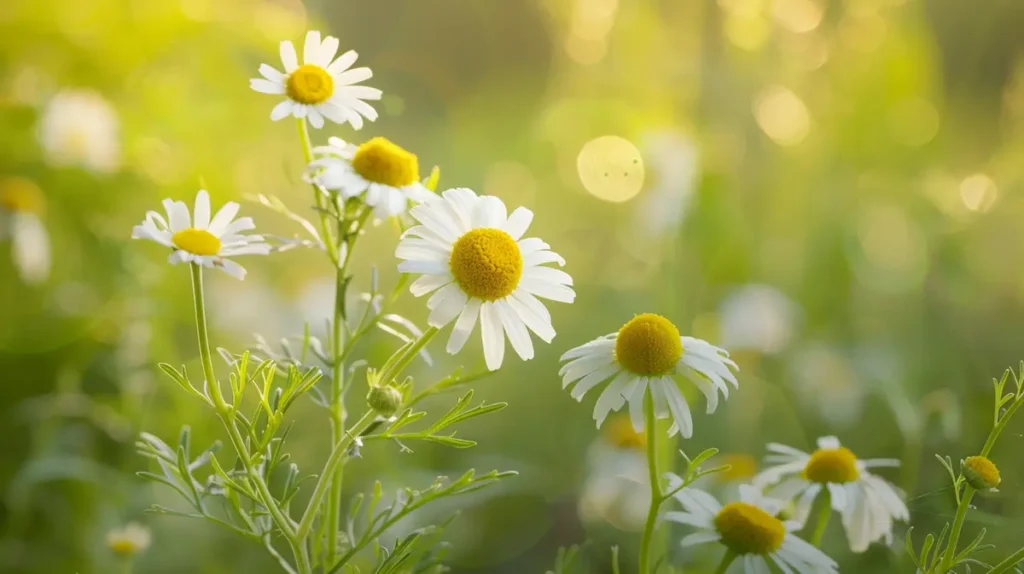
Matricaria recutita L. (syn. Matricaria chamomilla, Chamomilla recutita)
Plant family: Asteraceae (daisy family)
Common names: German chamomile, blue chamomile, wild chamomile, “ground apple” (that apple-like scent is real)
Nervine / calming (supports relaxation), Carminative (supports comfortable digestion), Anti-inflammatory, Antispasmodic , Mild antimicrobial
Practical Uses
How this herb is commonly used in everyday herbal practice.
For Humans
- Wind-down rituals: tea after dinner, bedtime blends, gentle daily comfort
- Digestive ease (traditional use): used after heavy meals or when the belly feels “knotty”
- Skin comfort (external): cooled tea as a compress; infused oil in balms; hair rinses for scalp comfort and shine
- Steam support (traditional): warm aromatic steam using an infusion (not essential oil) European Medicines Agency (EMA)
For Pets
Chamomile is a “proceed-like-you’re-carrying-hot-soup” herb for animals: sometimes used by professionals, but not a casual DIY.
- Pet-safe approach: talk to a veterinarian before internal use
- Topical use (with vet guidance): very dilute cooled infusion as a rinse/compress is sometimes used in practice, but pets—especially cats—can be sensitive
- Avoid essential oil around pets (diffusers, topical use, ingestion): concentrated aromatic compounds can be problematic
Also important: the ASPCA lists chamomile (Roman chamomile / Anthemis nobilis) as toxic to dogs and cats. That’s not the same species as German chamomile, but it’s a strong reminder that “chamomile” is a label used for multiple plants—so pet use should be conservative and professional-guided. ASPCA
Parts Used
Which parts of the plant are used and why.
Flower heads (capitula) are the classic herbal material—the part richest in aromatics and key flavonoids. European Medicines Agency (EMA)
Harvest timing tip: pick flowers when they’re fully open and fragrant; quality drops if they’re browned, damp, or over-handled.
Usage Forms & Shelf Life
Common preparation methods and how long they remain effective.
Internal
- Infusion (tea): best for water-soluble flavonoids and gentle aromatics
- Shelf life: drink same day (24 hours refrigerated max; quality drops fast)
- Tincture (alcohol extract): concentrates aromatic + flavonoid fractions
- Shelf life: typically 3–5 years (cool, dark storage)
External
- Compress / rinse (strong tea): for skin/scalp comfort
- Shelf life: make fresh; use within 24 hours refrigerated
- Infused oil: for balms and salves
- Shelf life: usually 6–12 months (depends on oil freshness + storage)
- Salve / balm:
- Shelf life: often 12–24 months (formula dependent)
Active Constituents
Key naturally occurring compounds.
Chamomile’s chemistry is one reason it shows up in both herbal textbooks and cosmetic labs.
Key groups (German chamomile):
- Essential oil (approx. 0.3–1.9%) with sesquiterpenes and azulenes European Medicines Agency (EMA)
- Flavonoids (up to ~6%) including apigenin and apigenin-7-glucoside European Medicines Agency (EMA)
- Coumarins (e.g., herniarin, umbelliferone) European Medicines Agency (EMA)
- Sesquiterpene lactones (e.g., matricin) European Medicines Agency (EMA)
- Spiroethers (aromatic compounds contributing to the “chamomile” profile) European Medicines Agency (EMA)
How It Works
Chamomile doesn’t rely on one superstar compound—it’s more like a good band where everyone actually practices.
- Flavonoids (especially apigenin): studied for interactions with pathways involved in relaxation and inflammatory signaling (research is ongoing; effects depend on preparation and dose). European Medicines Agency (EMA)+1
- Sesquiterpenes (like α-bisabolol) and azulenes (like chamazulene): associated with soothing activity in experimental models and topical traditions. PMC+1
- Tea vs. essential oil reality: tea pulls mostly flavonoids, mucilage-like polysaccharides, and a smaller portion of volatile constituents; the essential oil is a different “concentrate universe.” European Medicines Agency (EMA)
Extraction & Preparation
How to best extract and preserve active compounds.
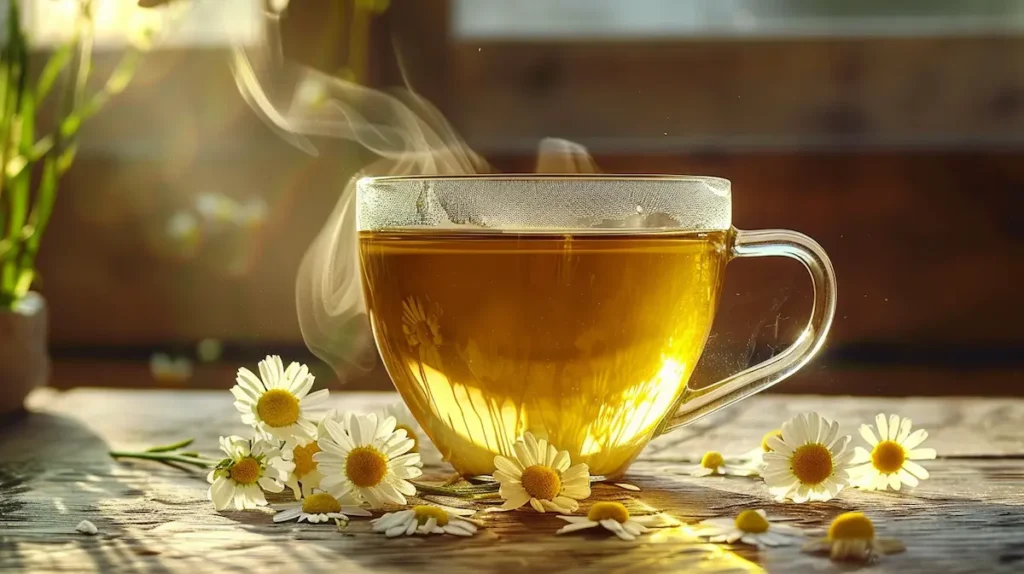
- For calming tea: use hot water infusion
- Typical approach: 1–2 tsp dried flowers per cup, covered while steeping (keeps aromatics from escaping into the air to start a new life as “kitchen perfume”).
- For aromatic-rich extracts: alcohol tincture captures a broader mix of volatile and polyphenolic compounds.
- For topical comfort: oil infusion is great for skin-focused preparations; keep heat low to protect aromatics.
A neat chemistry detail: some of the famous blue color in chamomile essential oil (chamazulene) is largely formed during steam distillation from precursor compounds—so you won’t see “blue tea,” and that’s normal. European Medicines Agency (EMA)+1
Processing Cautions
Moisture is the enemy: flowers mold easily—dry quickly with airflow, out of harsh sun.
Heat sensitivity: high heat can drive off volatile oils; keep drying gentle.
Storage: airtight container, cool/dark place; discard if musty, dull, or dusty instead of aromatic.
Allergen awareness: chamomile is in the daisy family; cross-reactivity can happen in sensitive individuals.
Herb Identification
How to recognize this herb in nature.
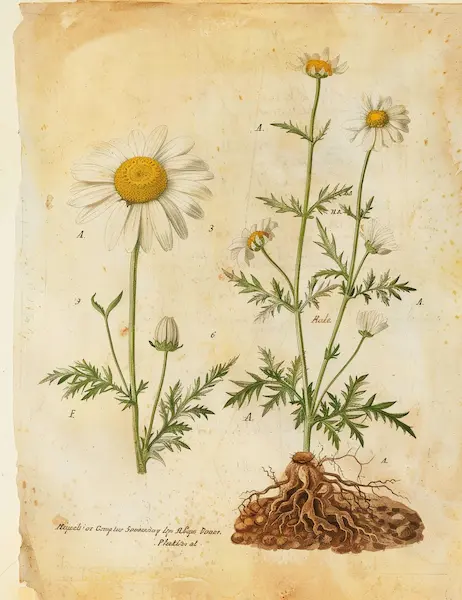
- Small daisy-like flowers: white rays, yellow center
- Aromatic, apple-like scent when crushed
- Finely divided feathery leaves
- Hollow, conical receptacle (a classic ID feature) Wikipedia+1
Look-alikes (use caution):
- Other “mayweed” daisies and chamomile-like plants can resemble it; the hollow receptacle helps distinguish true German chamomile. Wikipedia
If you’re foraging and you’re not 100% sure, skip it. Confident ID is the price of admission.
Selecting Quality Herb
Look for:
- Color: creamy-white petals and yellow centers; not brown or gray
- Aroma: sweet, apple-like, distinctly chamomile
- Form: whole flowers are easier to judge than powder
- Freshness cues: minimal dust, no musty smell, no clumping
Red flags:
- Flat smell, “hay-like” odor, visible moisture, or lots of stem filler
- Essential-oil claims that sound magical (plants are wonderful; marketing is… creative)
Dosage Guidelines
For Humans
Herbal tea: 1.5 g dried flowers per cup, up to 3–4 times daily (varies by tradition and goal). European Medicines Agency (EMA)
For Pets
Conservative rule: don’t self-prescribe internal chamomile for pets.
If a veterinarian approves a use, they’ll typically tailor it to species + size + health status.
Avoid essential oil exposure (diffusers and topical use) unless your vet explicitly okays it.
Side Effects & Contraindications
Possible issues (generally uncommon, but worth respecting):
- Allergic reactions (especially in people sensitive to Asteraceae/ragweed-like plants)
- Skin reactions with topical use in sensitive individuals
- Drug interaction caution: theoretical/possible concerns are often raised for anticoagulants and sedative herbs/meds—best handled conservatively if you’re on medications
- Pregnancy/lactation: safety data is limited; many clinicians recommend caution ScienceDirect+1
Natural Growing Areas
German chamomile is native to parts of Europe and western/northern Asia and has been introduced and naturalized widely, including Britain, Australia, and North America. PMC
Growing Tips
Light: full sun is ideal; partial shade helps in very hot climates Wisconsin Horticulture
Soil: well-drained; chamomile tolerates poorer soils (too much fertilizer = more leaf, fewer flowers) Wisconsin Horticulture
Water: moderate; avoid soggy soil
Spacing: give airflow—flowers hate staying damp
Harvest: pick regularly to encourage more blooms; dry promptly
Traditional Recipes
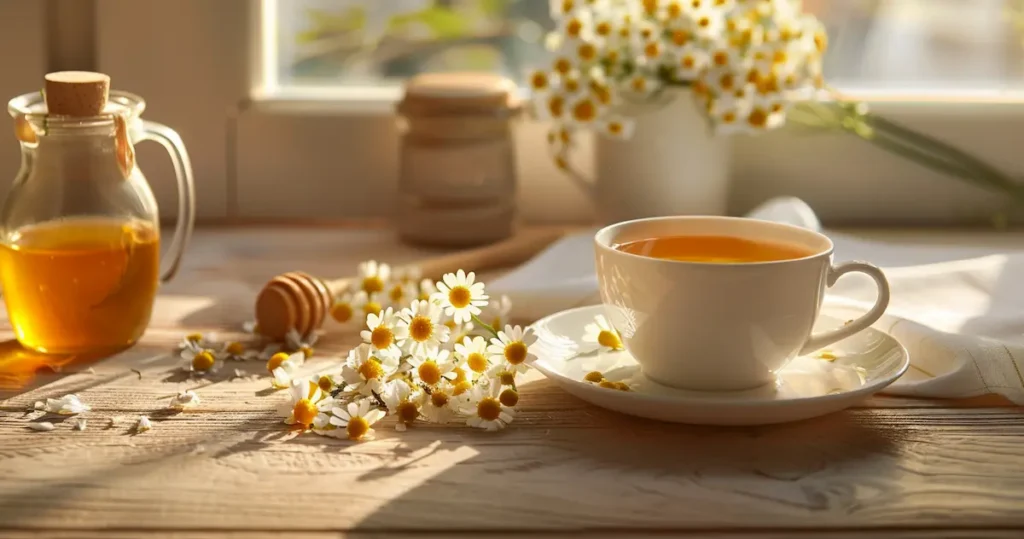
Classic Chamomile Tea (Infusion)
- 1–2 tsp dried flowers per cup
- Cover and steep 5–10 minutes
- Strain; optional honey
Strong Infusion for Compresses
- Make tea stronger than you’d drink
- Cool completely
- Apply with clean cloth for short sessions; make fresh daily
Chamomile-Infused Oil (Topical Base)
- Cover dried flowers with a stable carrier oil (e.g., olive, jojoba)
- Infuse gently (low heat) or time-based infusion in a cool dark place
- Strain well; store cool and dark
Frequently Asked Questions
Is chamomile safe for daily use?
Many people use chamomile tea daily as a gentle tradition. Individual sensitivity matters—if you’re allergy-prone (especially to the daisy family), start small and pay attention.
What does chamomile taste like?
Light, floral, and slightly apple-like. If it tastes bitter or dusty, that’s usually a quality issue, not your taste buds “doing it wrong.”
Fresh vs. dried chamomile—what’s better?
Fresh can be wonderfully aromatic, but dried is more consistent and easier to store. For most home use, good-quality dried flowers are reliable and convenient.
How long does dried chamomile last?
If stored cool, dark, and airtight, many people aim to use dried flowers within 12 months for best aroma and flavor. After that, it’s not “dangerous,” just less potent and more “herb-scented paper.”
Can pets use chamomile?
Sometimes under veterinary guidance, but it’s not a DIY herb for animals—especially cats. Also, “chamomile” can refer to different species, and at least one common type is listed as toxic by the ASPCA, so caution is smart. ASPCA
Is chamomile essential oil the same as chamomile tea?
Not even close. Tea is a dilute water extraction; essential oil is a concentrated distillate and should be treated as a different product with different safety rules.
References
European Medicines Agency (EMA), HMPC: Assessment report on Matricaria recutita L., flos and aetheroleum (2015). European Medicines Agency (EMA)
Haghi et al., phenolic compounds & pharmacopoeial standards for chamomile (European Pharmacopoeia thresholds). PMC
Srivastava et al., review on extraction, stability, and biological activity of chamomile. PMC
El Mihyaoui et al., review including geographic distribution and ethnobotanical context. PMC
ASPCA Animal Poison Control: Chamomile listing (pet safety reference). ASPCA
The information on this site is intended for educational use only. It is not meant to diagnose, treat, cure, or prevent any condition, and should not be used as a substitute for professional medical guidance.