
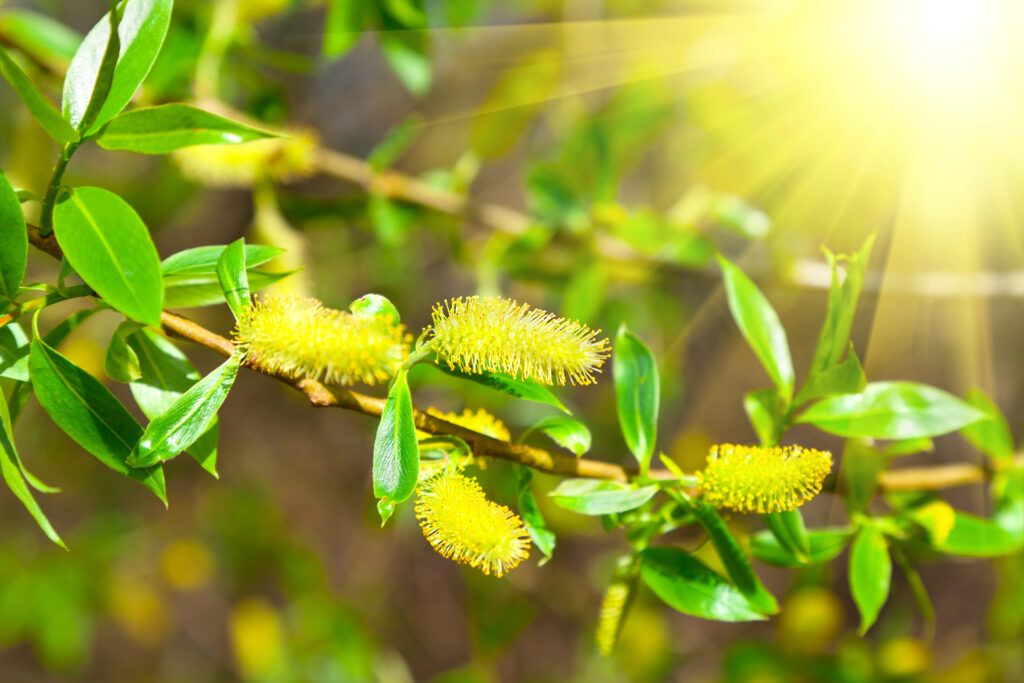
Salix alba. Common names: white willow, willow bark.
Willow has a long reputation as one of nature’s classic pain-relieving herbs. People have turned to its bark for centuries to ease headaches, soothe sore joints, and take the edge off fevers. It has a steady, cooling presence that tends to bring comfort without overwhelming the body. Many folks think of it as a gentle, natural counterpart to modern aspirin, though its effects unfold a bit more slowly.
Active constituents: Willow bark contains salicin, flavonoids, tannins, polyphenols, and a range of antioxidant compounds. These constituents are responsible for its cooling, anti-inflammatory, and analgesic qualities.
Preparations: Salicin and other key compounds extract well in water, so decoctions and long teas work nicely. Tinctures also draw out the bark’s active components and offer a more convenient form. Willow can be powdered for capsules, or used in topical preparations like liniments.
Use: Among the various trees valued in herbal medicine, willow stands out as one of the most famous. For hundreds of years, its bark has been employed to relieve pain and reduce inflammation. The key compound behind these benefits, salicin, was isolated in the 19th century; once consumed, the body transforms it into salicylic acid. This natural substance ultimately served as the foundation for synthesizing aspirin, the world’s first widely marketed synthetic analgesic (https://pmc.ncbi.nlm.nih.gov/articles/PMC6496865/, Hoffmann, 2003).
Actions in our body: Willow acts as an analgesic, anti-inflammatory, antipyretic, and mild astringent. It helps cool excess heat, reduce swelling, and ease tension held in the muscles and joints.
Dosage & safety: Decoction: 3-9 g dried bark/day divided into 3 doses; Tincture: 4-6 mL (1:5, 30%) 3x/day (Kuhn & Winston, 2008).
Willow bark should be used cautiously—or avoided—in individuals with known sensitivity or allergy to salicylates, such as aspirin (Gardner & McGuffin, 2013).
Pharmacology: Salicin converts in the body to salicylic acid, which helps reduce inflammation and pain by inhibiting prostaglandin production. Flavonoids and polyphenols add antioxidant support that further calms irritated tissues, while tannins bring a mild astringent effect that tones and tightens mucous membranes.
Taste: Bitter, earthy, slightly astringent.
Energy: Cooling, drying, grounding.
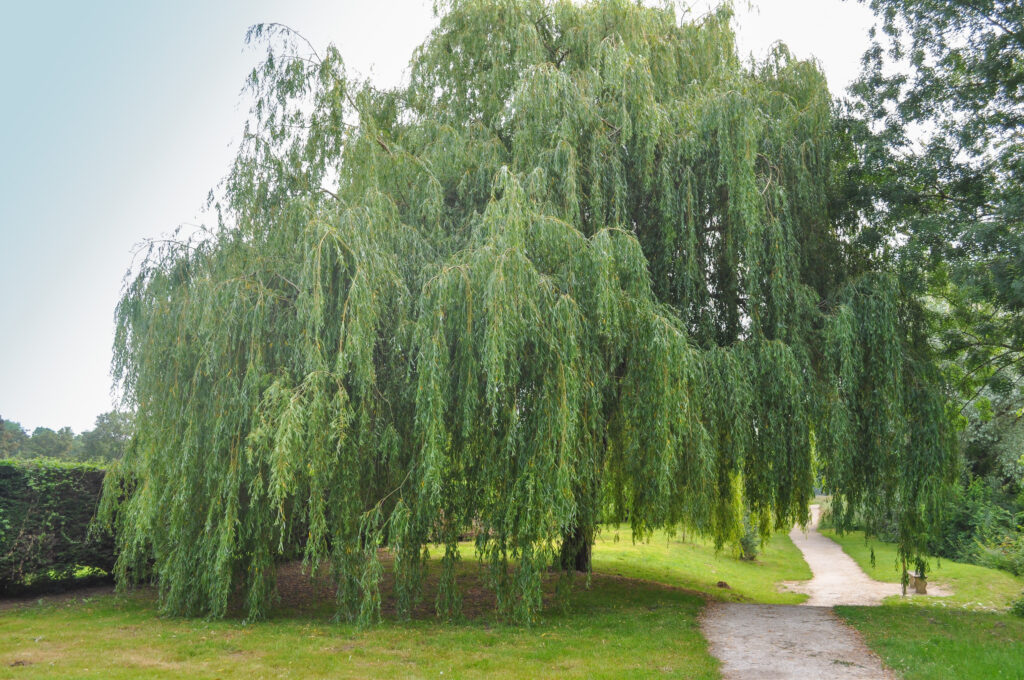
Botanical description: White willow is a tall, graceful tree with long, slender branches and narrow, silvery-green leaves. The bark is grayish and becomes more furrowed with age. Catkins appear in spring before the leaves fully emerge.
Family: Salicaceae.
Native region: Europe and western Asia.
Geographic distribution: Now naturalized in many temperate zones, including North America, where it grows along streams, rivers, and moist lowlands.
Harvesting guideline: Harvest bark from young branches in early spring before the sap rises. Take only thin strips and avoid girdling branches or trunks. Always gather from healthy trees and leave plenty of living tissue so the plant can recover easily.